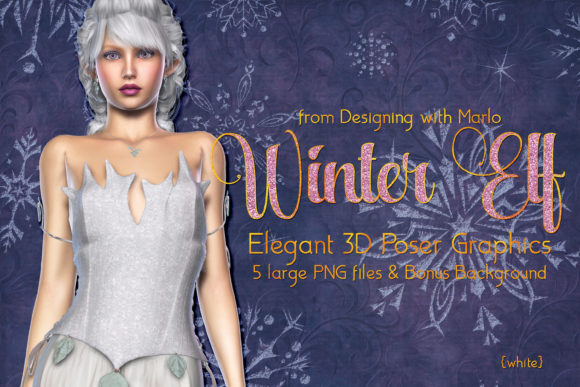
Fantasy Winter Elf Graphics: Elevating Seasonal Design with High-Quality 3D Assets
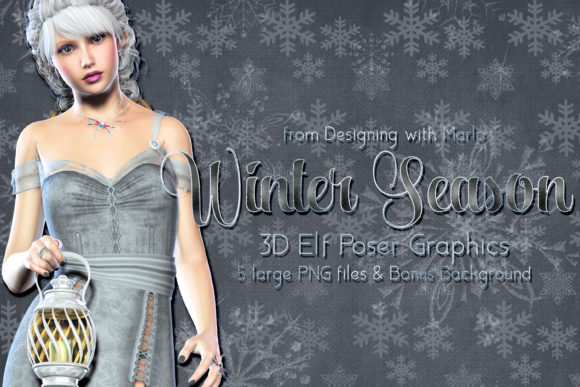
When the holiday season approaches, designers and content creators face a recurring challenge: finding seasonal imagery that feels fresh, professional, and distinct from the clip art of decades past. Fantasy Winter Elf Graphics have emerged as a sophisticated solution for those seeking to capture the ethereal beauty of winter without resorting to cartoonish or flat illustrations. Specifically, high-end 3D poser graphics featuring elegant subjects—such as an elf in a flowing white dress with pristine white hair—offer a level of realism and versatility that standard stock photos simply cannot match. These assets are not merely decorative; they are functional design elements capable of transforming greeting cards, social media campaigns, website headers, and product packaging into immersive visual experiences.
The appeal lies in the technical execution. Unlike traditional vector art or flat raster images, quality 3D renders possess depth, volumetric lighting, and realistic shadows. This layered look allows the graphic to sit naturally within a composition rather than appearing pasted on top of it. However, integrating these assets effectively requires an understanding of digital imaging fundamentals. Many users purchase premium graphics only to misuse them, resulting in wasted budget and subpar designs. By addressing common pitfalls early, you can ensure these fantasy assets deliver the professional polish your projects demand.
Understanding Resolution and Print vs. Web Requirements
One of the most frequent mistakes creators make is assuming all transparent PNGs are created equal. When evaluating Fantasy Winter Elf Graphics, resolution is non-negotiable. A common error is using web-optimized assets for print projects, leading to pixelation and blurriness that undermines the "lifelike" promise of 3D art. Conversely, using massive print-resolution files for simple social media posts can slow down website load times and create unnecessary workflow friction.
To avoid this, always verify the pixel dimensions before purchasing or downloading. For versatile usage that spans both digital and physical media, look for assets that are at least 2500 pixels in height. This specific dimension provides a sweet spot: it offers sufficient density for crisp printing on invitations and business cards while remaining manageable for web design when scaled down. If a graphic pack only offers 1000px files, be cautious. While adequate for Instagram stories, they will fail on a 5x7 invitation. Always prioritize packs that provide large-format source files, ensuring you have the headroom to crop, zoom, or resize without degrading quality.
The Critical Role of Lighting and Shadow Integration
Even with perfect resolution, a 3D elf graphic can look artificial if the lighting does not match your background. A prevalent misunderstanding is that transparent backgrounds automatically imply seamless integration. In reality, transparency removes the canvas, but it does not adjust the light source. Placing a character lit from the upper left onto a background with a central light source creates a subtle cognitive dissonance that viewers perceive as "fake."
Professional results require attention to shadow and highlight consistency. High-quality Fantasy Winter Elf Graphics should include baked-in ambient occlusion and directional shadows that ground the character. When composing your design, check the angle of the highlights on the elf’s white hair and dress. If they conflict with your background, use adjustment layers in your editing software to subtly shift the brightness or add a cast shadow layer beneath the character. Some premium packs address this by including matching background environments, such as a 3000 x 2000 JPG scene rendered with identical lighting parameters. Utilizing these paired assets eliminates guesswork and guarantees photorealistic cohesion.
Evaluating Pose Versatility and Negative Space
Aesthetics matter, but utility drives ROI. Beginners often select graphics based solely on how beautiful the character looks in isolation, neglecting how the pose functions within a layout. A stunning elf staring directly at the camera might be perfect for a poster, but terrible for a website hero section where text needs to reside beside the image. Overlooking negative space is a costly error that forces designers to awkwardly crop limbs or stretch backgrounds to accommodate copy.
Before acquiring a set, assess the variety of poses included. A practical collection should offer diversity: standing poses for full-body displays, seated or reclining poses for horizontal banners, and gestural poses that direct the viewer’s eye toward key information. Five distinct poses are generally the minimum for a versatile toolkit. Ask yourself: Can I place text next to this? Does the dress flow in a way that creates a natural frame? Is the gaze open or closed? Selecting graphics with intentional compositional balance saves hours of manipulation later.
File Format Integrity and Transparency Checklists
Technical file issues are the silent killers of creative momentum. Users sometimes download what they believe is a transparent PNG, only to discover a white box surrounding the character when placed over a colored background. This usually happens when files are converted incorrectly or saved as JPEGs masquerading as PNGs. Additionally, some marketplaces compress previews so heavily that artifacts appear around the edges of the hair, which then transfer to the final download.
To prevent this, perform a pre-flight check immediately upon download. Open the file in your editor and place a bright solid color layer behind it. Inspect the edges of the white hair and dress closely. Clean 3D renders should have smooth anti-aliased transitions, not jagged halos or gray fringing. Ensure the file format is genuinely .PNG with alpha channel support. If you plan to use these for commercial printing, also verify the color profile; while RGB is standard for web, some printers prefer CMYK conversions done professionally rather than automatically. Keeping your source files organized and verified ensures that when inspiration strikes, technical hurdles do not stall your progress.
Maximizing Value Across Multiple Platforms
The true strength of lifelike 3D fantasy graphics lies in their cross-platform adaptability. Because they lack the stylistic constraints of hand-drawn illustration, they bridge the gap between whimsical and corporate. A white-dressed elf can serve as the centerpiece of a child’s birthday invitation, yet the same asset, when paired with minimalist typography and ample whitespace, works elegantly for a luxury winter skincare brand or a boutique hotel’s holiday newsletter.
To get the most from your investment, think beyond single-use applications. Create templates using these graphics for recurring seasonal content. The inclusion of bonus backgrounds extends this value further, allowing you to create cohesive social media carousels or email headers without sourcing additional stock photography. Remember that elegance comes from restraint; let the detailed textures of the 3D render speak for themselves rather than overcrowding the design with excessive effects. By treating these graphics as premium photographic elements rather than disposable clip art, you elevate the perceived value of everything you create.