Evaluating the My Favorite People Call Me Dad Svg File for Father’s Day Crafting Projects
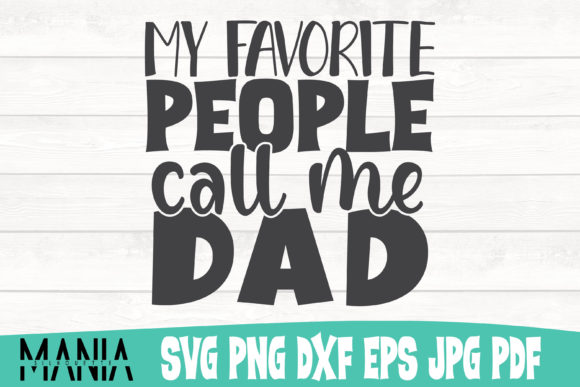
Selecting the right digital asset for personalized apparel requires balancing aesthetic appeal with technical reliability. When researching options for Father’s Day or new dad gifts, the My Favorite People Call Me Dad Svg File frequently appears as a primary candidate due to its specific emotional resonance and comprehensive file inclusion. However, experienced crafters understand that sentiment alone does not guarantee a successful project. The decision to purchase this specific pack should be based on an evaluation of its format versatility, layer organization, and compatibility with your existing hardware ecosystem compared to other market alternatives.
Technical Composition and Format Versatility
A significant differentiator in the digital design marketplace is the breadth of usable formats included in a single purchase. Many budget-friendly or free alternatives offer only a basic SVG or a flattened PNG, forcing users to convert files manually or lose editability. This specific pack addresses that limitation by providing six distinct file types, each serving a unique function in the production workflow.
- SVG Files: Designed specifically for cutting machines like Cricut Design Space and Silhouette Studio. These are vector-based, meaning they rely on mathematical paths rather than pixels, allowing for infinite scaling without quality loss.
- PNG Files: Provided with a transparent background, these are essential for sublimation printing, direct-to-garment (DTG) services, or digital mockups where a clean edge is required without weeding.
- EPS Files: The industry standard for professional editing. If you need to modify the typography, adjust node points, or recolor elements in Adobe Illustrator or CorelDRAW, the EPS file offers the necessary vector data structure.
- JPEG Files: Optimized for iron-on transfers and heat press machines that do not support vector cutting. These are raster images best suited for photographic-style prints or simple heat transfers.
- DXF Files: A universal CAD format that ensures compatibility with older versions of Silhouette Studio (Basic Edition) and various laser engraving software.
- PDF Files: Acts as a visual reference sheet containing all clip art in one place, streamlining inventory management and project planning.
When comparing this pack to generic "dad quote" bundles, the inclusion of both EPS and DXF formats suggests a higher tier of utility. Users who anticipate needing to resize the design for vastly different applications—from a newborn onesie to a large workshop sign—will find the vector integrity maintained across these formats superior to raster-only alternatives.
Layer Organization and Production Efficiency
Beyond file format, the internal architecture of an SVG determines how much time you spend preparing a cut. Poorly designed files often arrive with hundreds of ungrouped nodes, overlapping layers, or text that has been converted to outlines prematurely. The My Favorite People Call Me Dad Svg File is marketed as being meticulously crafted with well-defined, continuously tested layers.
This distinction matters practically. In a comparative testing scenario, a well-layered file allows for:
- Color Separation: Easy toggling of individual colors for multi-layer vinyl projects without manual re-grouping.
- Weeding Optimization: Clean cut lines reduce the risk of tearing delicate vinyl during the weeding process.
- Editability: Retaining text as editable text (where licensing permits) or cleanly grouped paths allows for personalization, such as adding a child’s name or a specific year.
If you are evaluating this against free downloads found on open repositories, be aware that free files often lack this rigorous testing phase. While a free alternative might save money upfront, the tradeoff is frequently measured in wasted vinyl, machine calibration errors, and additional hours spent cleaning up vector paths. For commercial sellers or those producing high-value gifts, the reliability of professionally organized layers often justifies the investment.
Software and Hardware Compatibility Assessment
Compatibility is rarely a concern for users with the latest equipment, but it becomes a critical decision factor for those with mixed workflows or legacy systems. This pack claims broad compatibility ranging from consumer cutting machines to professional 3D editing suites.
Cutting Machine Ecosystems
The files are optimized for Cricut Explore/Air/Maker series and Silhouette Cameo/Curio lines. Additionally, the inclusion of DXF and native SVG support extends usability to Make The Cut and Sure Cuts A Lot platforms. If you operate a small business using multiple machine brands, this universal approach eliminates the need to purchase separate listings for each ecosystem.
Professional Editing Suites
For designers using Adobe Illustrator, Photoshop, After Effects, or Flash, the EPS and PDF components provide a bridge between crafting and professional graphic design. This is particularly relevant for creators who want to incorporate the "My Favorite People Call Me Dad" motif into larger composite designs, video overlays, or branded merchandise lines. Standard craft-only SVGs often lack the metadata and curve precision required for professional post-production, making this pack a more versatile choice for hybrid creators.
Use Case Evaluation: When This Pack Fits Best
While versatile, no single design resource solves every problem. Understanding the ideal fit helps prevent buyer's remorse.
Ideal Scenarios
- Multi-Media Production: You plan to make both vinyl decals (using SVG/DXF) and sublimation mugs (using PNG) with the same design.
- Scalable Merchandise: You need the design to look crisp on a baby bib and equally sharp on a 24-inch garage poster. The vector nature ensures zero pixelation at any size.
- Customization Needs: You require access to EPS layers to change fonts or rearrange elements for specific clients.
- Laser Engraving: The clean vector paths in the DXF/SVG files are suitable for Glowforge or xTool machines for wood or acrylic projects.
When to Consider Alternatives
- Single-Use Hobbyists: If you only own a basic iron-on machine and never intend to edit the design, the JPEG file alone suffices. Paying for a premium multi-format pack may be unnecessary overhead.
- Photographic Style Preference: This design is typographic and illustrative. If your project requires realistic textures, grunge effects, or photorealism, a raster-focused bundle or AI-generated image might serve better than a clean vector file.
- Commercial Licensing Restrictions: Always verify the specific license terms. If you need to mass-produce items beyond the allowed limit or use the design in trademarked branding, you may need to commission a custom exclusive design regardless of this pack's technical quality.
Comparative Value Analysis
In the current digital design landscape, consumers generally choose between three tiers: free resources, single-format budget packs, and comprehensive premium bundles. The My Favorite People Call Me Dad Svg File occupies the premium tier.
Free Resources: Often come with hidden costs in the form of cleanup time, missing layers, or restrictive non-commercial licenses. They are excellent for practice but risky for client work.
Budget Single-Format Packs: Usually offer only SVG/PNG. They are cost-effective for simple vinyl t-shirts but fail when the project scope expands to include embroidery digitizing, laser cutting, or professional print media.
Comprehensive Premium Bundles: Higher initial cost but lower cost-per-use. By including EPS, DXF, PDF, and JPEG alongside standard vectors, the effective price per format drops significantly. For active makers, this consolidation reduces digital clutter and streamlines asset management.
Making an Informed Decision
Ultimately, the value of the My Favorite People Call Me Dad Svg File depends on your production pipeline. If you prioritize speed, reliability, and cross-platform flexibility, the technical specifications of this pack align with professional and serious hobbyist standards. The meticulous layer organization and diverse format selection mitigate common friction points in digital crafting.
However, if your needs are strictly limited to casual, single-medium application, simpler alternatives may suffice. Evaluate your upcoming project list, check your software version requirements, and confirm licensing terms before purchasing. By focusing on technical fit rather than just the sentimental message, you ensure that the digital asset serves as a reliable tool in your creative arsenal rather than a source of frustration.