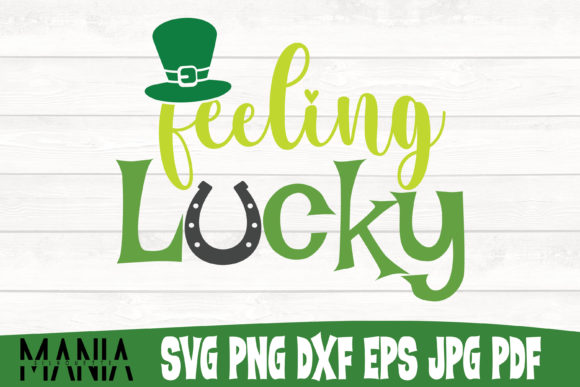
Evaluating the Feeling Lucky Svg Cut File: Formats, Compatibility, and Practical Use
When selecting digital assets for crafting or design projects, the technical specifications of a file are often just as important as the aesthetic appeal. The Feeling Lucky Svg Cut File represents a specific category of premium digital downloads that prioritize versatility and production readiness over simple visual novelty. For crafters, designers, and small business owners aged 20 to 50, understanding the distinction between this comprehensive pack and standard single-format downloads is essential for efficient workflow management. This resource is not merely an image; it is a multi-format toolkit designed to bridge the gap between creative software and physical manufacturing devices.
At its core, the Feeling Lucky Svg Cut File is distinguished by its meticulous layer organization and broad format inclusion. Unlike generic clip art that may require significant cleanup before use, this pack is engineered with defined, continuously tested layers. This structural integrity ensures that when you import the file into cutting software or vector editors, the elements are already separated and ready for manipulation. This level of preparation addresses one of the most common pain points in digital crafting: the time lost to ungrouping, re-welding, and fixing broken nodes in poorly converted vectors.
Format Versatility and Software Ecosystems
The primary value proposition of this pack lies in its inclusion of six distinct file types: SVG, PNG, EPS, JPEG, DXF, and PDF. When comparing this to alternative options that may only offer SVG or PNG, the expanded format list significantly increases the asset's utility across different platforms. Understanding when to use each format is key to maximizing the return on this resource.
- SVG Files: Included is one SVG file perfectly designed for Cricut Design Space and Silhouette Studio. This scalable vector format is the industry standard for cutting machines because it retains mathematical precision at any size. It allows for individual layer control directly within the cutting software.
- DXF Files: Essential for users of the basic (free) edition of Silhouette Studio, which does not support SVG imports. Having a DXF file included removes the paywall barrier for entry-level machine owners, making the Feeling Lucky Svg Cut File accessible without requiring a software upgrade.
- PNG Files: Provided with a transparent background, this raster format is ideal for sublimation printing, web graphics, or print-then-cut projects where vector editing is unnecessary. It serves as a quick-use alternative when the complexity of an SVG is not required.
- EPS Files: Geared toward professional editing, the EPS format ensures compatibility with Adobe Illustrator, CorelDRAW, and other advanced vector suites. This makes the pack suitable for designers who need to modify the artwork extensively before sending it to a cutter or printer.
- JPEG Files: Specifically noted for Iron-On machines and general heat transfer applications, the JPEG provides a flattened, high-resolution image that works with older or simpler thermal transfer devices that cannot read vector data.
- PDF Files: Acting as a master catalog, the PDF contains all clip arts in one place. This is particularly useful for inventory management, proofing, or sharing design concepts with clients before committing to a physical cut.
Comparing Premium Packs to Standard Alternatives
In the marketplace of digital cut files, users often face a choice between low-cost, single-format files and comprehensive packs like this one. Standard alternatives often lack the rigorous testing mentioned in the product description. A common tradeoff with cheaper or free alternatives is node density; poorly digitized vectors may have excessive anchor points that cause cutting machines to stutter or produce jagged edges. The Feeling Lucky Svg Cut File mitigates this risk through its "meticulously crafted" layer structure.
Furthermore, many standalone designs rely on cartridge systems or proprietary ecosystems that limit where and how a design can be used. The flexibility of this pack explicitly rejects those limitations. By providing open, industry-standard formats, it grants users complete ownership and control. If you are currently locked into a specific brand’s subscription service or cartridge library, this type of universal file offers a pathway to independence. However, if your workflow is entirely contained within a single proprietary ecosystem and you never intend to edit vectors or use multiple machine brands, the extra formats in this pack may be superfluous. In such cases, a simpler, ecosystem-specific file might suffice, though at the cost of future-proofing.
Scalability and Production Consistency
A critical factor for professionals and serious hobbyists is the infinite expandability of vector-based assets. Because the Feeling Lucky Svg Cut File utilizes true vector geometry in its SVG, EPS, and DXF iterations, it can be resized from a baby shirt decal to large-scale signage without pixelation or quality loss. This contrasts sharply with raster-only alternatives, which degrade when enlarged.
The description mentions the ability to print "without altering at all their high quality aspect." In practical terms, this means the line weights and proportions remain consistent regardless of scale. For users producing merchandise for varied demographics—from infant wear to adult apparel—this consistency reduces the need to purchase separate design sizes. When evaluating this against hand-drawn or auto-traced alternatives, verify that the lines remain smooth at maximum zoom. The organized layers in this pack suggest manual refinement rather than automated tracing, which typically results in superior scalability.
Compatibility Considerations and Decision Factors
While the compatibility list for this pack is extensive, covering Cricut Explore, Silhouette Studio, Make The Cut, Sure Cuts A Lot, and Adobe Creative Cloud applications, users must still assess their specific hardware and software versions. No digital asset is universally perfect for every scenario. Below are key decision factors to help determine if this specific pack aligns with your current needs.
When This Pack Is the Right Choice
- Multi-Machine Households: If you own both a Cricut and a Silhouette, or plan to upgrade machines in the future, the dual inclusion of SVG and DXF ensures you do not need to repurchase designs when switching hardware.
- Commercial Production: For sellers who need to adapt a single design for stickers, t-shirts, mugs, and laser engraving, having EPS and PNG formats in one download streamlines the product development cycle.
- Design Modification Needs: If you frequently change fonts, colors, or element arrangements, the clean layer structure and EPS availability make this a superior base compared to flattened images.
- Cross-Platform Workflows: Users who design in Adobe Illustrator but cut on a Cricut will benefit from the seamless transition between professional editing software and consumer cutting hardware.
When to Consider Alternatives
Despite its strengths, the Feeling Lucky Svg Cut File may not be the optimal solution for every user. If you require 3D modeling assets specifically for rendering rather than fabrication, while the pack mentions compatibility with some 3D editing software, dedicated 3D mesh files (like .OBJ or .STL) would be more appropriate than 2D vectors. Additionally, if you are looking for a massive bundle of hundreds of unrelated designs for bulk inventory, a single premium pack may be less cost-effective than a subscription service, even if the individual quality here is higher.
Users working exclusively with raster-based sublimation workflows who never intend to cut vinyl may also find the vector formats unnecessary. In that niche, a high-DPI PNG-only pack might offer better value per dollar. However, for the majority of hybrid crafters who navigate between digital design and physical output, the redundancy of formats in this pack acts as an insurance policy against technical incompatibility.
Technical Integrity and Workflow Efficiency
The mention of "continuously tested layers" is a significant indicator of quality assurance. In comparative evaluations, this feature often separates professional-grade assets from amateur uploads. Poorly layered files force users to spend hours reconstructing designs that should be ready-to-cut. When assessing the Feeling Lucky Svg Cut File against other options, consider the hourly value of your time. A slightly higher upfront cost for a pre-organized file often yields a lower total cost of ownership when factoring in labor savings.
Ultimately, the decision to acquire this pack should be based on a realistic assessment of your production pipeline. It excels in environments where flexibility, cross-compatibility, and editability are paramount. It serves as a robust foundation for projects ranging from personalized gifts to commercial merchandise, provided the user leverages the correct format for their specific tool. By offering a bridge between consumer crafting machines and professional design software, it occupies a valuable middle ground in the digital asset market, reducing friction for creators who refuse to be limited by a single platform or device.